
Main Research Interests
Over the past decades, I have developed several interrelated lines of research:
- innovations and their long-term residues — how societies make sense of and care for the “left-behinds” of innovation (nuclear waste, microplastics, digital residues) [https://innovation-residues.eu]
- governance of science and technology in democratic societies, and the forms of public participation it involves; science communication
- changes in the institutional, social, and epistemological regimes of knowledge production (in particular values and evaluation in research; research integrity; ethical issues)
- the role of time, temporal regimes, and imagined futures in research and in science-technology-society relations
- the critical significance of socio-technical infrastructures for science and society.
Over time, my empirical engagement has spanned diverse fields, with a strong focus on biomedicine and the life sciences, the environment (energy, plastics, digital transformation), and physics (new materials, sensors, nanotechnology).
Active Research Projects
Innovation Residues – Modes and infrastructures of caring for our longue-durée environmental futures (INNORES) – ERC Advanced Grant; Project duration: 01/2023 – 12/2027
Innovation residues designate those left-behinds of innovations that profoundly shape human lives as they stay with us for a long time–well beyond moments of production and consumption, and well beyond the time horizons considered when assessing the worth of innovations. Residues are material witnesses to culture and practice of innovation, to diverse politics at work, and to the limited attention to long-term sustainable futures in a world predominantly shaped by short-term impact thinking.
More
New Chemical Geographies: Governing Emerging Contaminants, funded by the Australian Research Council; Project duration: 2026-2028. (external CO-PI)
This project aims to examine the governance and regulation of chemical contaminants. Ubiquitous in everyday products and the environment, this class of chemicals has a range of potential health and environmental implications. Focusing on the development of regulatory frameworks this project will generate novel insights concerning the ways in which the governance of chemical contaminants is shaped by societal values. The project will provide a platform for broad community engagement in the governance of emerging contaminants, while contributing key insights across a range of nationally significant policy areas, including the critical interface between net zero and circular economy policies and hazard and risk management.
More
Major past projects
Smart4Health: Citizen-centred EU-HER exchange for personalized health. Horizon 2020 Project; Project duration: 1/2019-2/2023 (Lead of workpackage 1)
The Horizon 2020 project Smart4Health aims at developing, testing and validating a health data platform prototype, enabling EU Citizens to be active participants in managing their own health. The key objective of Smart4Health is to place the citizen in the centre of decisions with regard to their own healthcare by enabling the possibility of sharing health data with different clinicians, medical centers, local and international societies, for research activities as well as to engage directly with healthcare providers.
More
ICU4Covid: Cyber-Physical Intensive Care Medical System for COVID-19. Horizon 2020 Project; Project duration: 1/2021-12/2022 (Lead of workpackage 4)
The vision and key objective of ICU4Covid is to deliver intensive care medicine fit for the fight against COVID-19 to the EU citizen and the health workforce rapidly and at scale by clinically validating and deploying the Cyber-Physical-system for Tele- and Intensive Care Medicine (CPS4TIC). The CPS4TIC consists of a telemedicine cockpit, telemedicine consoles at each peripheral hospital, a connector platform and smart bedside hubs including robotic arm at the bedsides of both, the central telemonitoring clinics and the peripheral telemonitored hospitals.
More
Societal Aspects of Biobanks in Austria (BBMRI.at #2). Funding: BMWFW; Project duration: 12/2018 – 11/2023 (Lead of workpackage 4)
In contemporary biomedicine, biobanks have become core infrastructures collecting, storing and providing a large variety of human materials and data, often combined with clinical information. Such infrastructures are essential for research as they allow exchange of biological materials and data over distance and across a variety of sites (in different national contexts, as well as to different research fields and institutions, ranging from basic research, over translation to bio-industrial applications). In order to make biobanks societally and scientifically sustainable — i.e. to assure that societies and different stakeholders long-term support — it is essential to understand what different actors expect from this infrastructure, why they find it worth contributing to, using and supporting it as well as what impact a focus on data has on scientists’ and citizens’/patients’ (self)understanding.
More
Making Europe Through and for its Research Infrastructures: Co-producing European Science and Society in Transnational Research Infrastructures, Funding: FWF-DFG, collaboration with STS-TUM; Project duration: 1/2019 – 6/2023
In the project ‘Making Europe through and for its research infrastructures’ (METAFORIS), a collaboration between the STS department of the University of Vienna and the Munich Center for Technology in Society (MCTS) at TU Munich we comparatively explore how European integration and European science have co-produced each other. We do this by looking at four eminent Transnational European Research Infrastructures (TERIs) in different scientific fields, established at different moments in time. We study the Centre Européen pour la Recherche Nucléaire (CERN; established in 1954), the European Space Agency (ESA; 1975), Laserlab Europe (LLE; 2001), and Biobanking and BioMolecular Research Infrastructure (BBMRI; 2008). We aim to analyze how each infrastructure embodied a distinct vision for European integration, and how, conversely, these research infrastructures were powerful vehicles to advance integration. We will thus explore how changing imaginations of Europe since World War II affected the foundation, the institutional forms and societal positioning of TERIs.
More
FutureArctic: A glimpse into the Arctic future: equipping a unique natural experiment for next-generation ecosystem research, Funding: Horizon 2020 – ITN; Project duration: 2019-2022
Climate change will affect Arctic ecosystems more than any other ecosystem worldwide, with temperature increases expected up to 4-6°C. While this is threatening the integrity and biodiversity of the ecosystems in itself, the larger ecosystem feedbacks triggered by this change are even more worrisome. During millions of years, atmospheric carbon has been stored in the Arctic soils. With warming, the carbon can rapidly escape the soils in the form of CO2 and (even worse) the strong greenhouse agent CH4.
More
Borderlands of Good Scientific Practice. Investigating a global phenomenon in its local versions, Funding: Jubiläumsfonds der Österreichischen Nationalbank; Project duration: 2/2017 – 1/2021
The project will investigate how under the changing conditions in research and innovation issues of respecting good scientific practice come up and how they are dealt with. In doing so it focuses on a specific institutional, epistemic and local context, i.e. an Austrian University and the field of life sciences/biomedicine, while looking at it through the lens of international debates. The project will not start from a fixed normative definition of good scientific practice (GSP), but much rather follow the notion through researchers’ narratives, institutional structures and wider societal narratives.
More
RFID & Society. Ethical and societal challenges of implementing localization systems of Radio Frequency Identification (RFID) Technologies for intelligent process control; FFG; Project duration: 10/2014-12/2017 (Cooperation with TU Vienna)
Over the past decade Radio Frequency Identification (RFID) Technologies have entered our work and life environments in a wide range of production and distribution contexts, ranging from car production chains, over electronic toll collection systems to fashion industry. Using tags as carriers of information, they are meant to help to automatically identify and track objects within and across sites. What sounds like a real technological advancement for realizing better automated production processes or of easy control of objects and stocks, it also poses a number of challenges when it comes to asking questions concerning ethical and societal aspects related to such realizations. To investigate these latter aspects during the development of a specific RFID tracking technology is the main aim of the “RFID & Society” project.
More
From Lab to Intervention and Back – Doing and Undoing Diversity in Obesity Research, Treatment and Prevention. Funding: WWTF; Project duration: 05/2012-4/2016
In recent years, “diversity” has become a buzzword within medical practice, research and health policy. Contrary to the prior assumption that human bodies are essentially similar and an associated focus on standardized patients, the view that people have different dispositions and needs regarding health has gained prominence. Age, gender, education, socio-economic status and ethnic and cultural background all seem to make a difference in relation to health risk, health behavior and the use of medical services. Medical practice and research are increasingly called upon to take these differences into account, and to develop ethnically, culturally and gender sensitive approaches.
More
Making Futures Present – On the Co-production of Nano and Society in the Austrian Context. Funding: FWF; Project duration: 10/2008-03/2013
The new research field nanotechnology has entered the public arena against the background of debates about the relation of science, technology and society (as for instance those over genetically modified organisms). Since their first appearance, nanotechnologies are closely interwoven with cultural narrations of utopian and dystopian social imaginations. Therefore, nanotechnologies are of special interest for the analysis of the changing relations of science and society. Moreover, “nano” as so-called “enabling technology” links a variety of disciplines and potential fields of application and is thus confronted with different technoscientific and social framings.
More
Transdisciplinarity as Culture & Practice – Analysing Transdisciplinary Sustainability Research Projects in the Program proVISION. Funding: BMWF/proVISION; Project duration: 09/2009-06/2013
During the last years the term transdisciplinarity – which is not older than 20 years – is hyped by funding agencies, politicians and university managers who share the opinion of transdisciplinary research as appropriate way to handle complex questions. It is claimed that science therefore has to transcend a certain disciplinary reduction and to integrate various kinds of knowledge and experiences (including extra-scientific knowledge) in order to frame both the definition of a problem and possible solutions according to the particular context. That contains an array of different expectations and demands for both research and non-scientific forms of knowledge production, which challenge all participants.
More
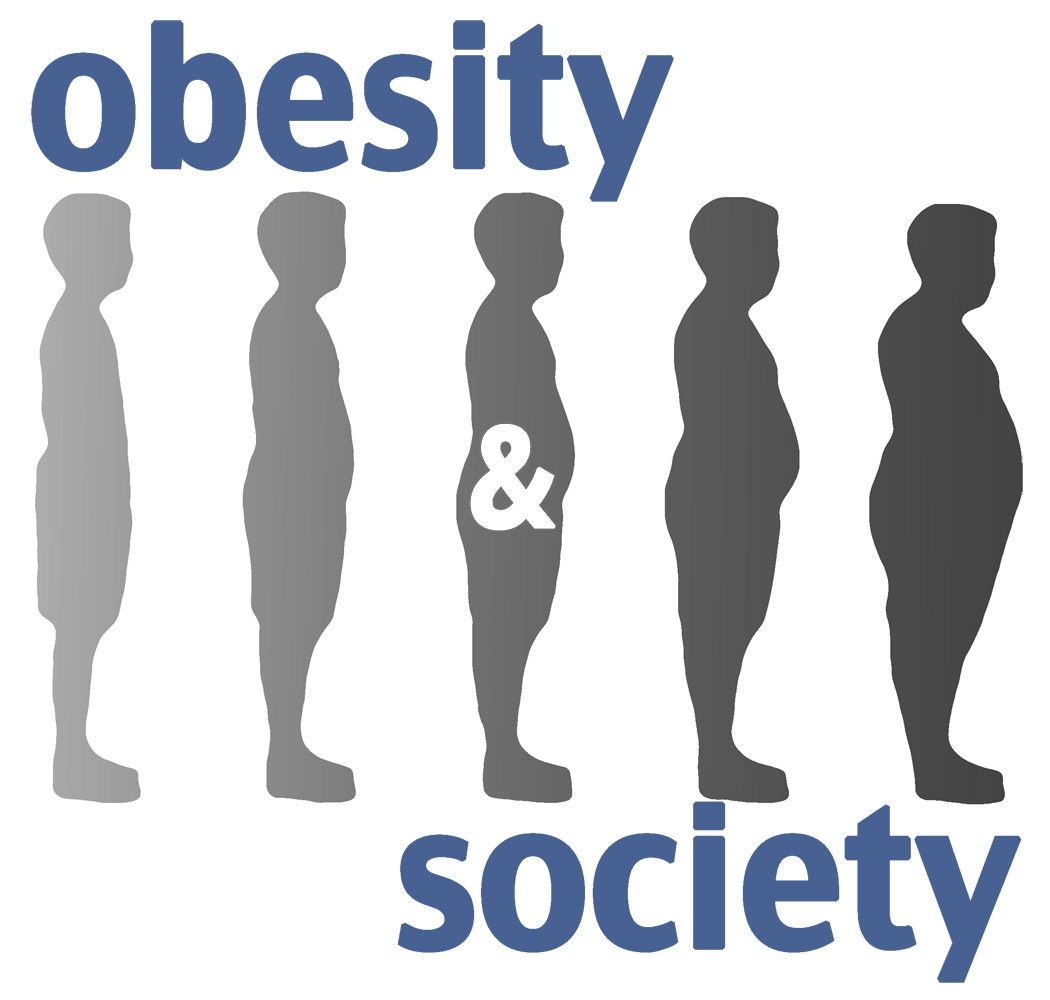
Perceptions and Imaginations of Obesity as a Socio-scientific Problem in the Austrian Context. Funding: BMWF/GEN-AU; Project duration: 03/2009-03/2012
In recent years, obesity as a public health problem has acquired increasing prominence both on the policy agenda and in public discourse. In these discussions, obesity is predominantly framed as a societal problem requiring urgent action, as the term “global epidemic” coined by the World Health Organization in 2004 amply suggests. Also the EU’s public health program addresses “the obesity problem” by focusing on nutrition and physical activity. The first Austrian Adipositas report published in 2006 joins the choir urging to act. Increasing advertisements for new medication and a growing number of public events to address and educate citizens to look after their bodies are the most recent developments as yet.
More
Living Changes in the Life Sciences: Tracing the “Ethical” and the “Social” within Scientific Practice and Work Culture. Funding: BMWF/GEN-AU/ELSA; Project duration: 09/2007-12/2010
“Science under attack” titles a 2006 Nature editorial describing how political context is intruding the core of scientific activities. “In today’s scientific labour market, just doing good science is no longer enough” underlined Science a year earlier, hinting at the difficulties of scientific careers today. And in 2003 the executive officer of American Association for the Advancement of Science (AAAS) stressed the importance of addressing “not only the inherent benefits, but also the limits, perils and pitfalls” of science. He points to the importance of more openly addressing the realities of scientific research and its impacts on society. These are but three examples showing that the scientific community is increasingly aware of the co-evolution of science and society, altering not only the ways in which knowledge is produced and disseminated, but also potentially affecting the knowledge itself.
More

“Virtuell informiert” The Internet in the Medical Field (VIRINFO). Funding: FWF; Funding; Project duration: 12/2004-0/2008
Over the past decades information and communication technologies have gradually entered public and private spheres, restructuring them through new qualitative and quantitative possibilities of access to information as well as of exchange and interaction. In the medical field these changes seem to be especially relevant. Last but not least health information is among those topics people most often search for on the Internet.
More
Knowledge, Institutions and Gender: an East-West comparative study – KNOWING; Project duration: 12/2004-0/2008
Building on scholarship in feminist philosophy and social studies of science, the project will examine the role of gender in the production of knowledge contexts and cultures in an East-West perspective in two scientific fields (sociology and biology). While critiques of science and situated conceptions of knowledge have been developed in western Euro-American contexts, traditional assumptions of knowledge production were largely unexamined in the former state-socialist countries. The absence of local examinations of knowledge contexts currently jeopardises effective implementation of gender equality in the ERA.
More
Informed Consent: Space of Negotiation between Biomedicine and Society, Funding: bm:bwk; Research Program TRAFO; Project duration: 04/2005 – 02/2007.
In recent years the biomedical system has lived through important changes, in particular concerning doctor-patient relations. We chose informed consent as concrete setting to observe and analyse these transformations: we understand informed consent as a space in which the question of “adequate” information and possibilities of decision-making are negotiated. Increasingly, there is also a trend for regulation in the field of medical, non-therapeutic research. This opens new types of questions, which have so far been neglected by social science research.
More
Challenges of Biomedicine: Socio-Cultural Contexts, European Governance and Bioethics (COB). Funding: EU/FP6, Science and Society; Project duration: 04/2004-09/2007 (Project coordinator)
This project is to investigate the influence the European public and the biomedical science exert on each other. This bio-political relationship will be examined by analysing the variety of important concepts such as ‘identity’, ‘citizenship’, and ‘integrity of human body’ and to what extent biomedical science interacts with them. The significance of this interaction will be examined in two dimensions: opportunities of participation and governance of medical science, and Cultural plurality and diversity of public preferences towards biomedicine (esp. genetic testing and transplantation medicine).
More
Let’s talk about GOLD! Analysing the Interactions between Genome Research(ers) and the Public as a Learning Process. Funding: BMWF/GEN-AU/ELSA, Project duration: 02/2004 – 01/2007
In recent years we have witnessed an increase in public controversies concerning issues of science and technology in particular linked to questions of genetics. Trust in existing societal mechanisms of handling the relation of science, technology and society seems broken. The purely expert oriented models of dealing with social and ethical issues in these domains start to be questioned.
More
Optimizing Public Understanding of Science and Technology in Europe (OPUS). Funding: EU/FP5; Project duration: 01/2000-06/2003 (Project Coordinator)
The pervasiveness of science and technology’s influence in every aspect of modern life implies a real necessity for citizens to understand and appreciate the contributions, and the limitations, of what research and technological development can provide for human society and the natural environment. The barriers to communication between researchers and the public are complex, derived from a combination of social, cultural, educational and practical inhibitors. At European level, the barriers are even greater and more complex. OPUS — Optimising Public Understanding of Science.
More